

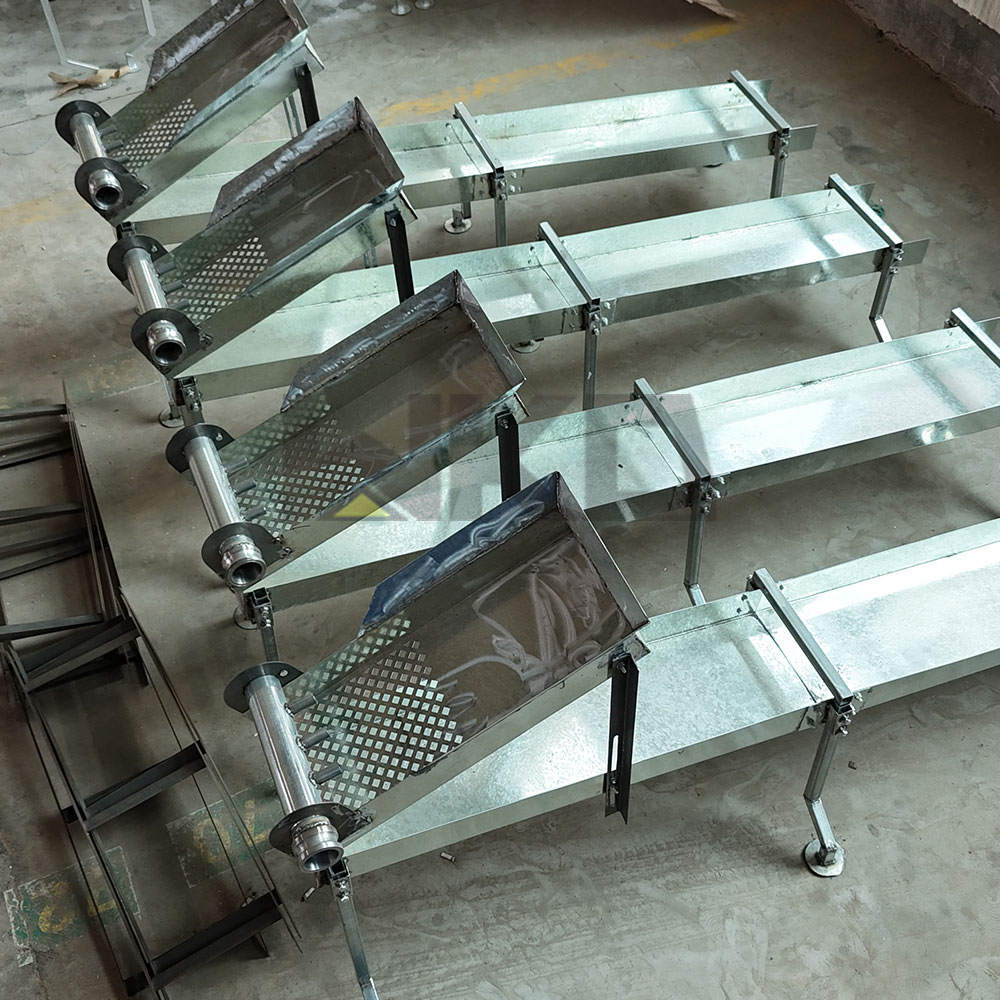
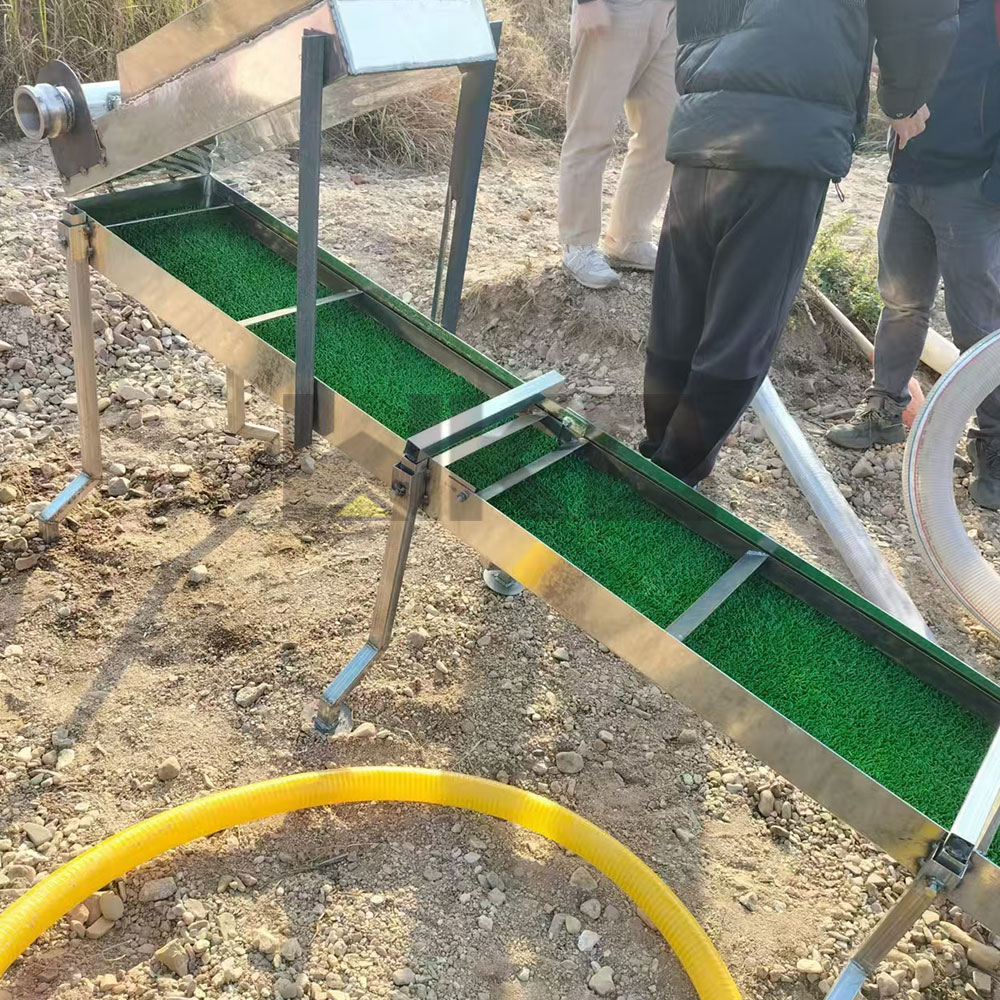
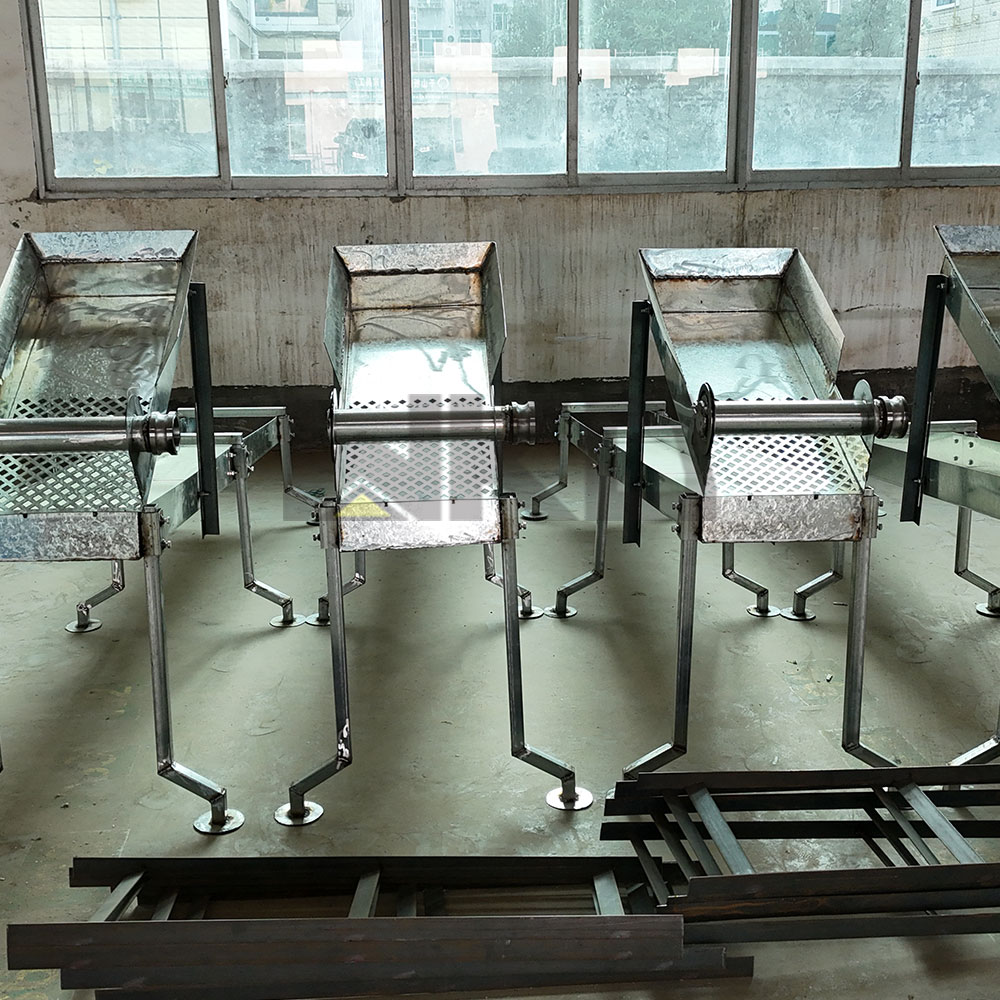
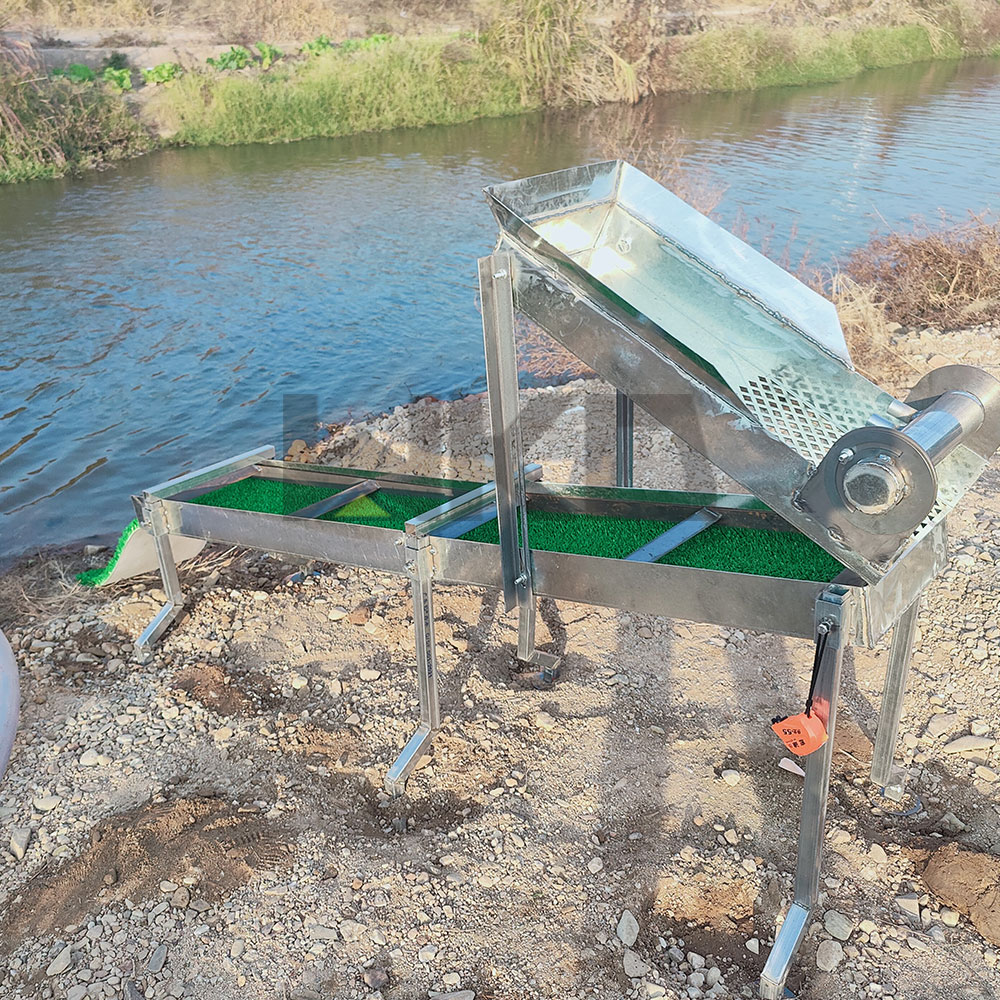
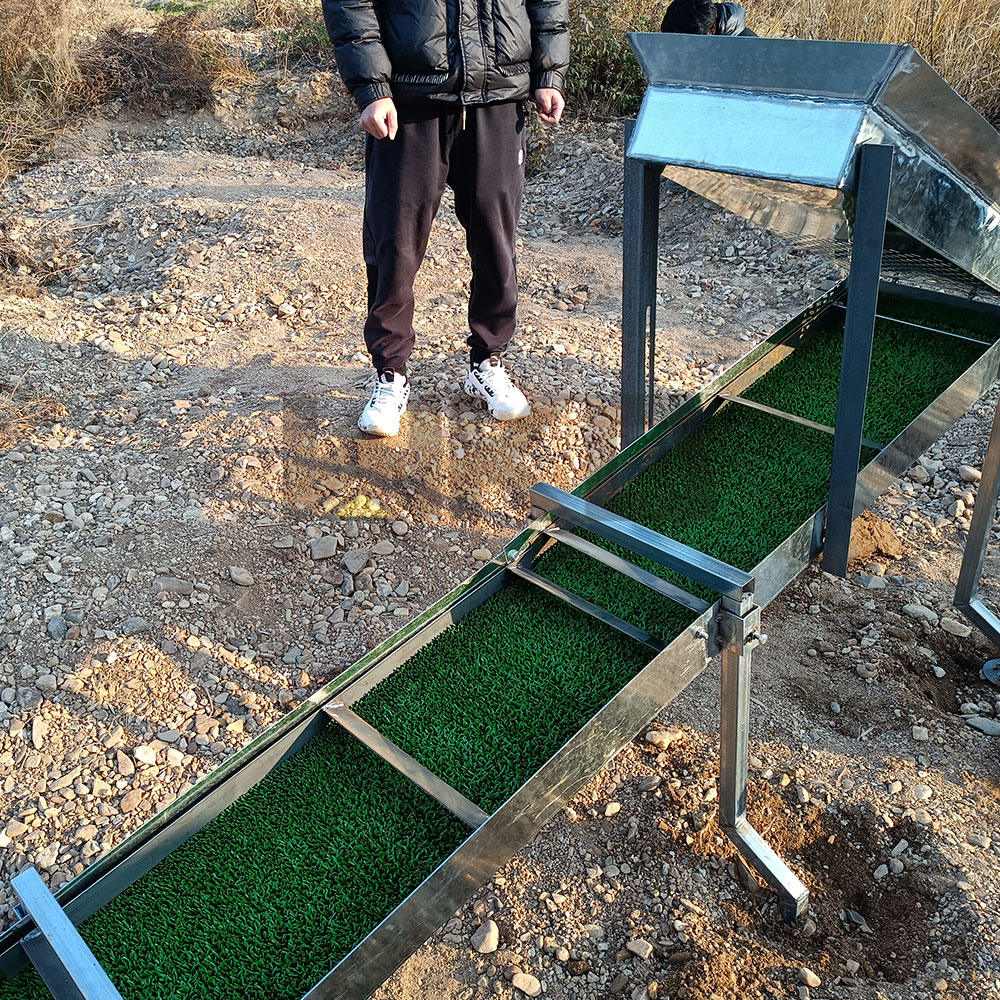
Small Gold Panning Machine
Despite lighter options for the choice of materials used in the construction of sluice boxes, even modern sluice boxes are difficult to transport and store, particularly due to their size. A typical sluice box may be between four and eight feet in length and between one and two feet in width, thus making transportation of a sluice box, particularly to an outdoor water source, such as a stream or river, relatively difficult.

Working Principle
Early sluice boxes, such as those used during the Gold Rush, consisted of a simple wooden trough lined with raised obstructions placed at a 90° angle to the flow of the water.
These obstructions are referred to as “riffles”. When all of the gravel-gold mixtures was run through the sluice box, the water would be shut off, and the riffles were removed. The heavy materials, which contained the gold, would then be gathered. This extracted material is referred to as the “concentrate”. Several tons of gold-bearing gravel could be processed through the sluice box in this manner.
In use, the gold-bearing gravel, for example, is dumped into an upper end of the sluice, and the flow of water washes the material down the length of the trough defined by the box. The lighter pieces of gravel are carried in suspension down the entire length of the sluice box to come out as “tailings” at the lower end of the sluice box. Heavy material, such as gold, sinks quickly and is caught by the riffles. Once the riffles gather their fill of concentrate, the concentrate is then removed for extraction of the gold.
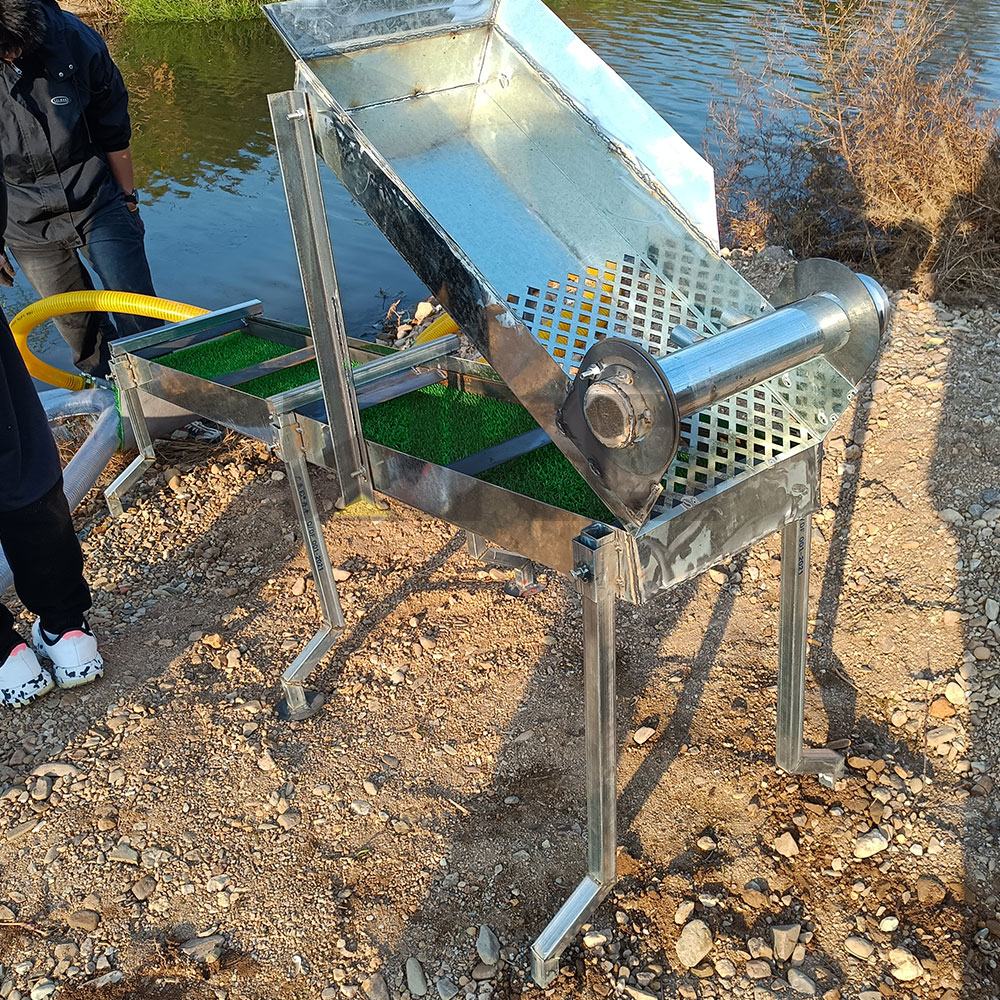
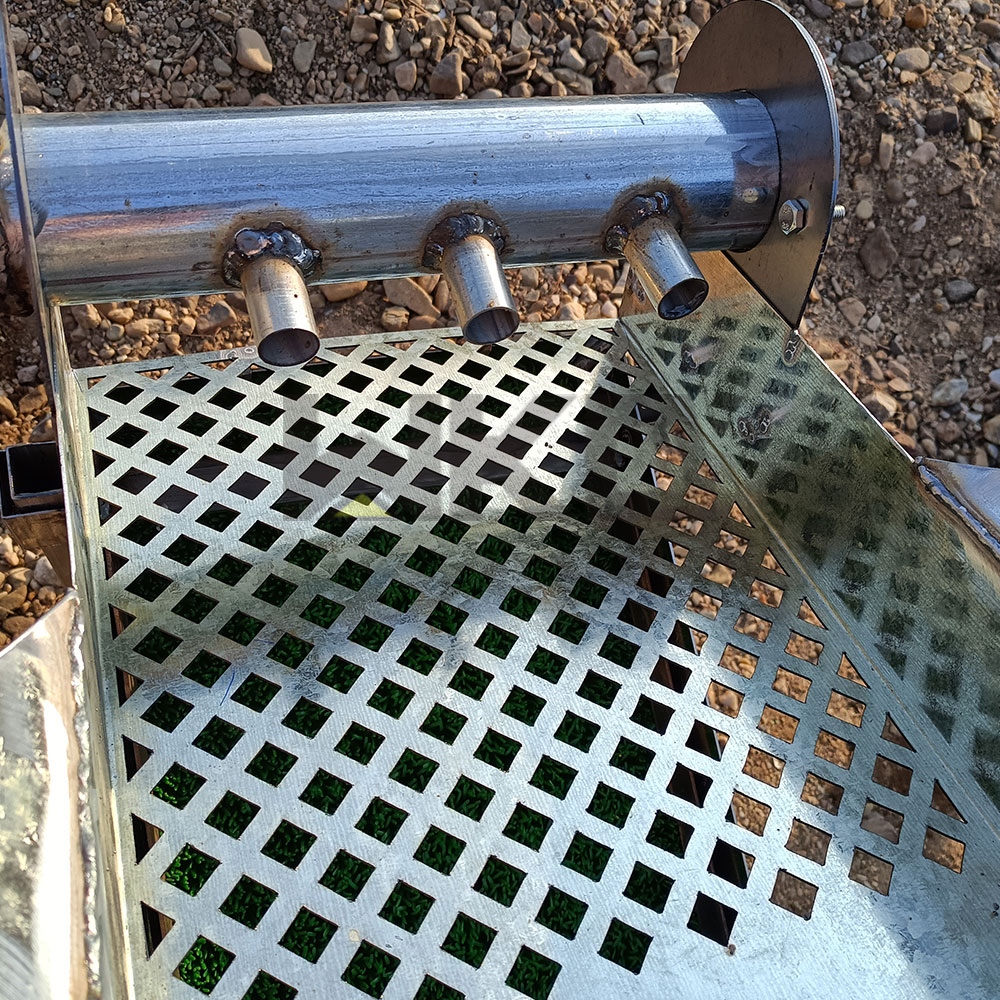
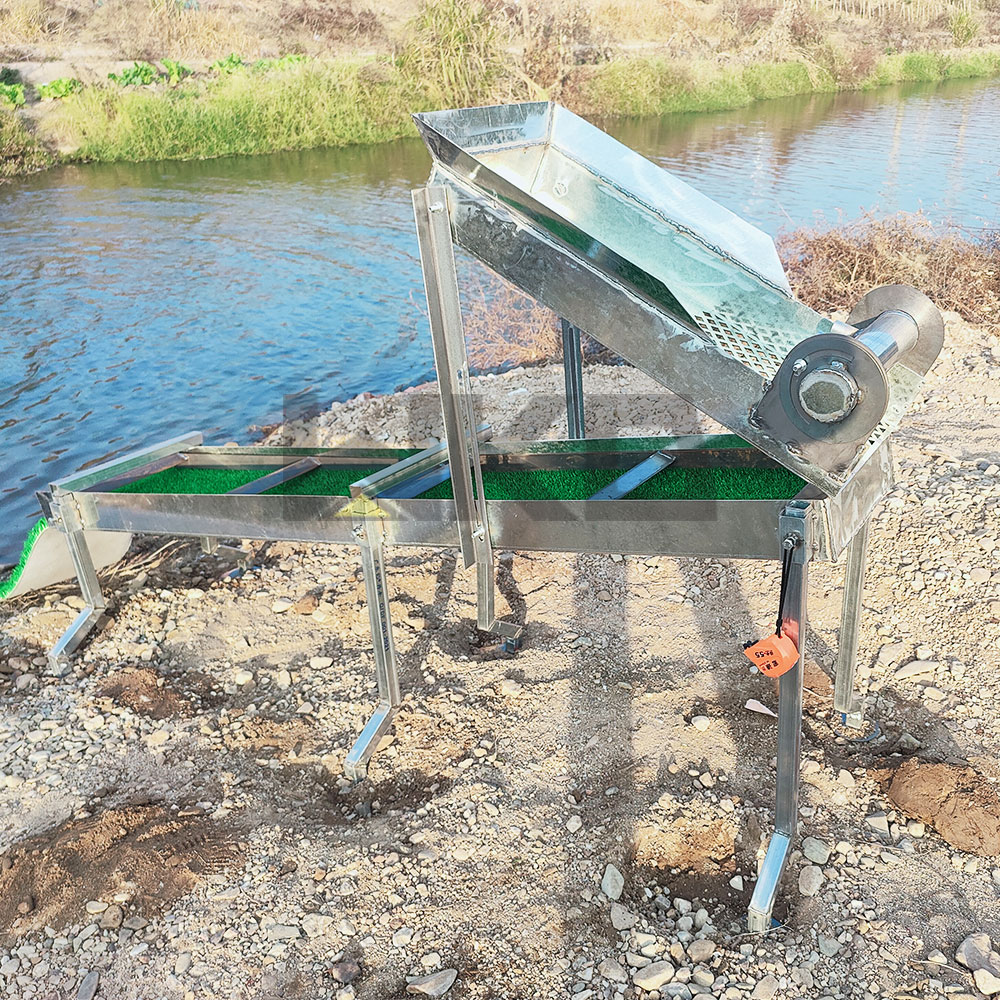
Details Images
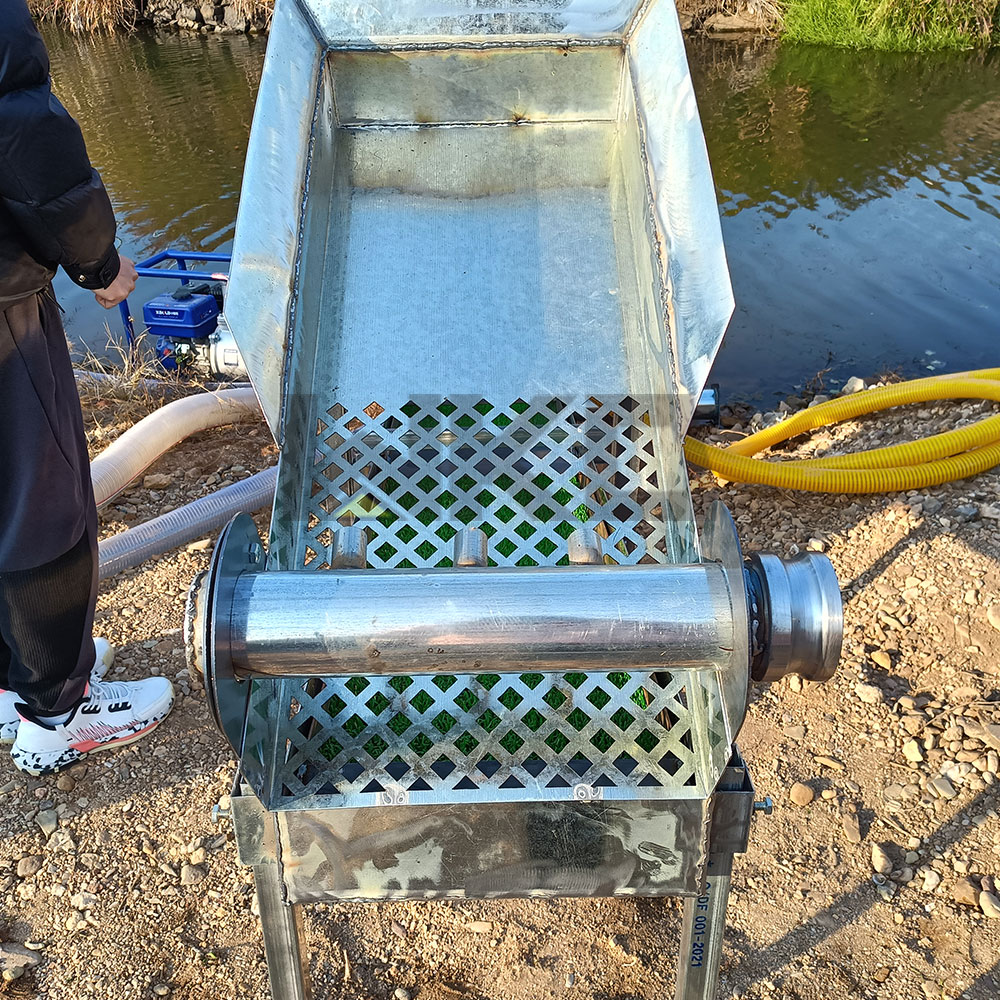
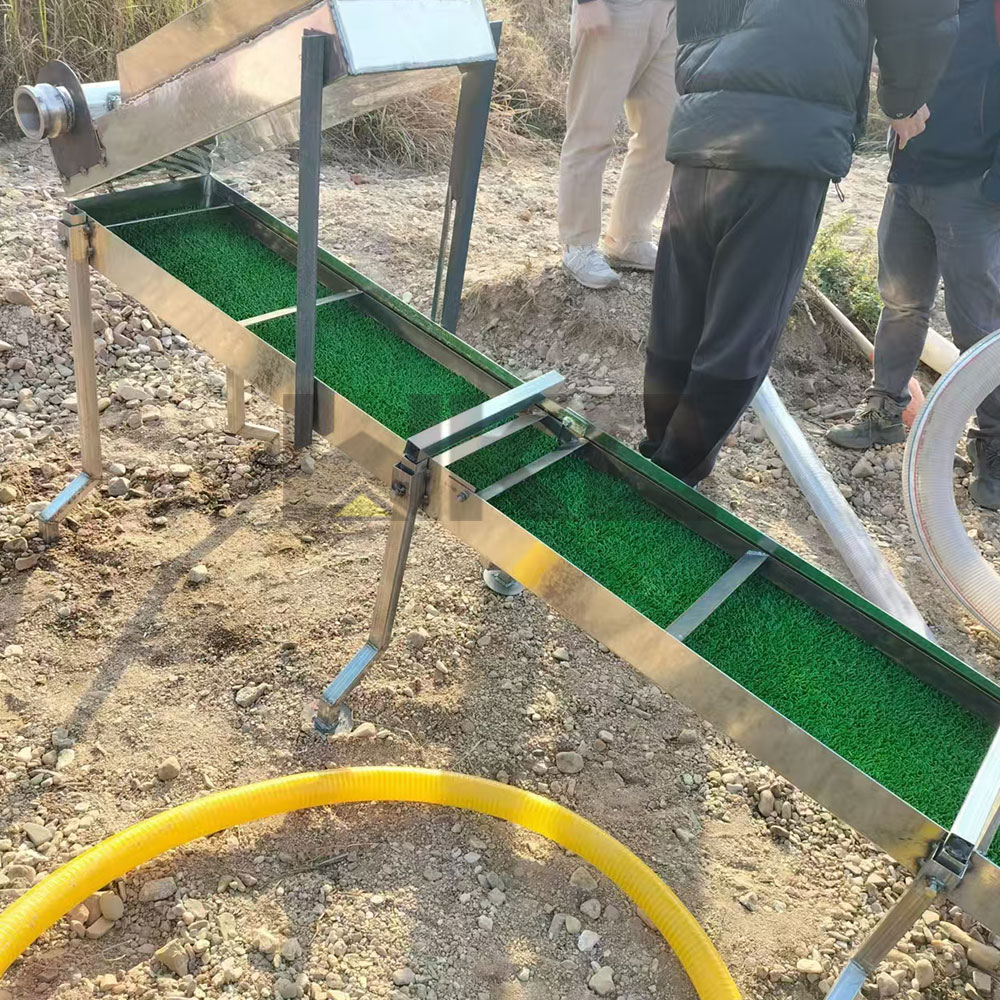
Email: sale06@miningshakingtable.com
Whatsapp/Mobile: +8615390744410